UI UX Case Study, Android, 2026
A single purpose confirmation tool for the part of the brain that does not believe you already checked.
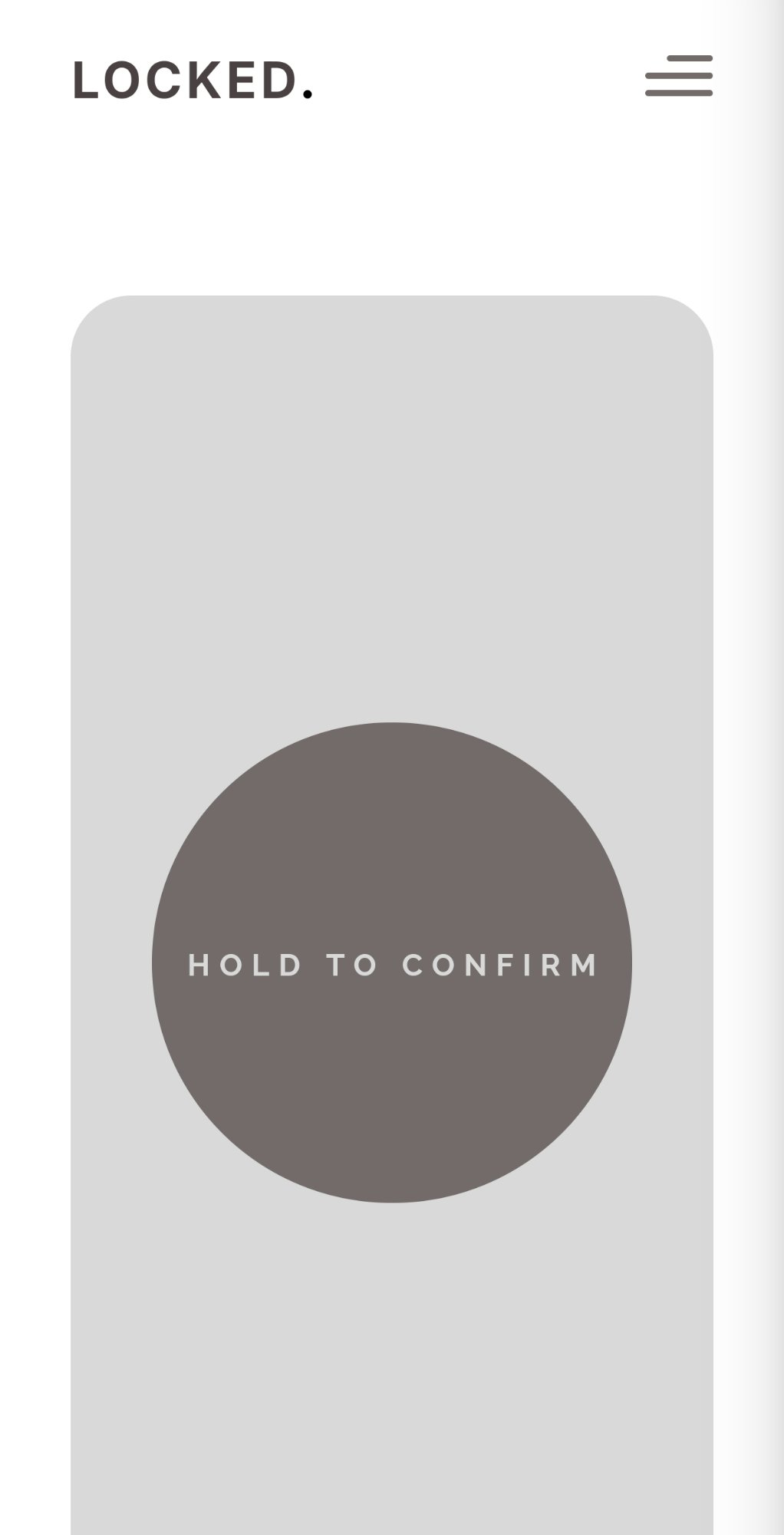
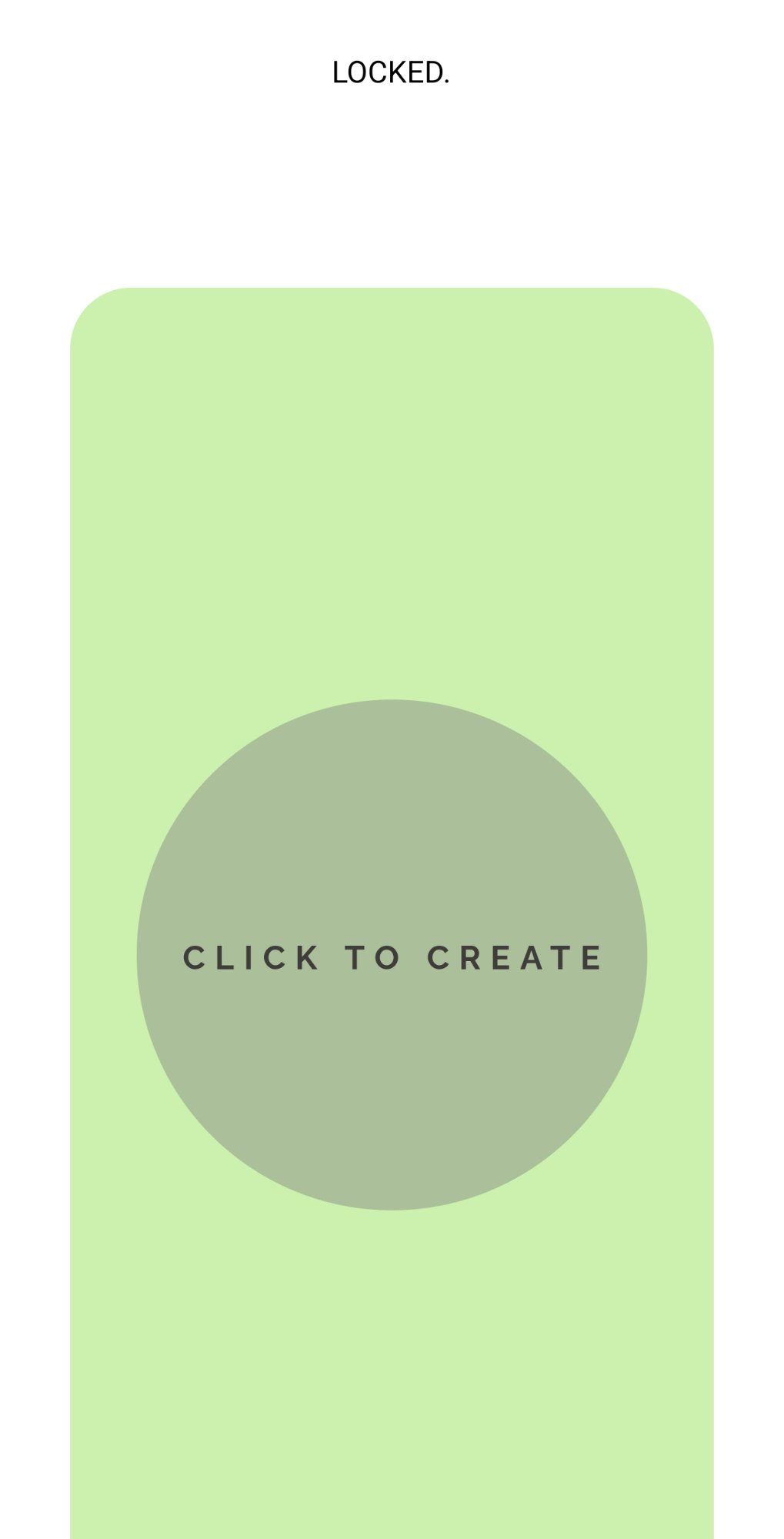
One button. No instructions. HOLD TO CONFIRM says everything. Nothing competes for attention.
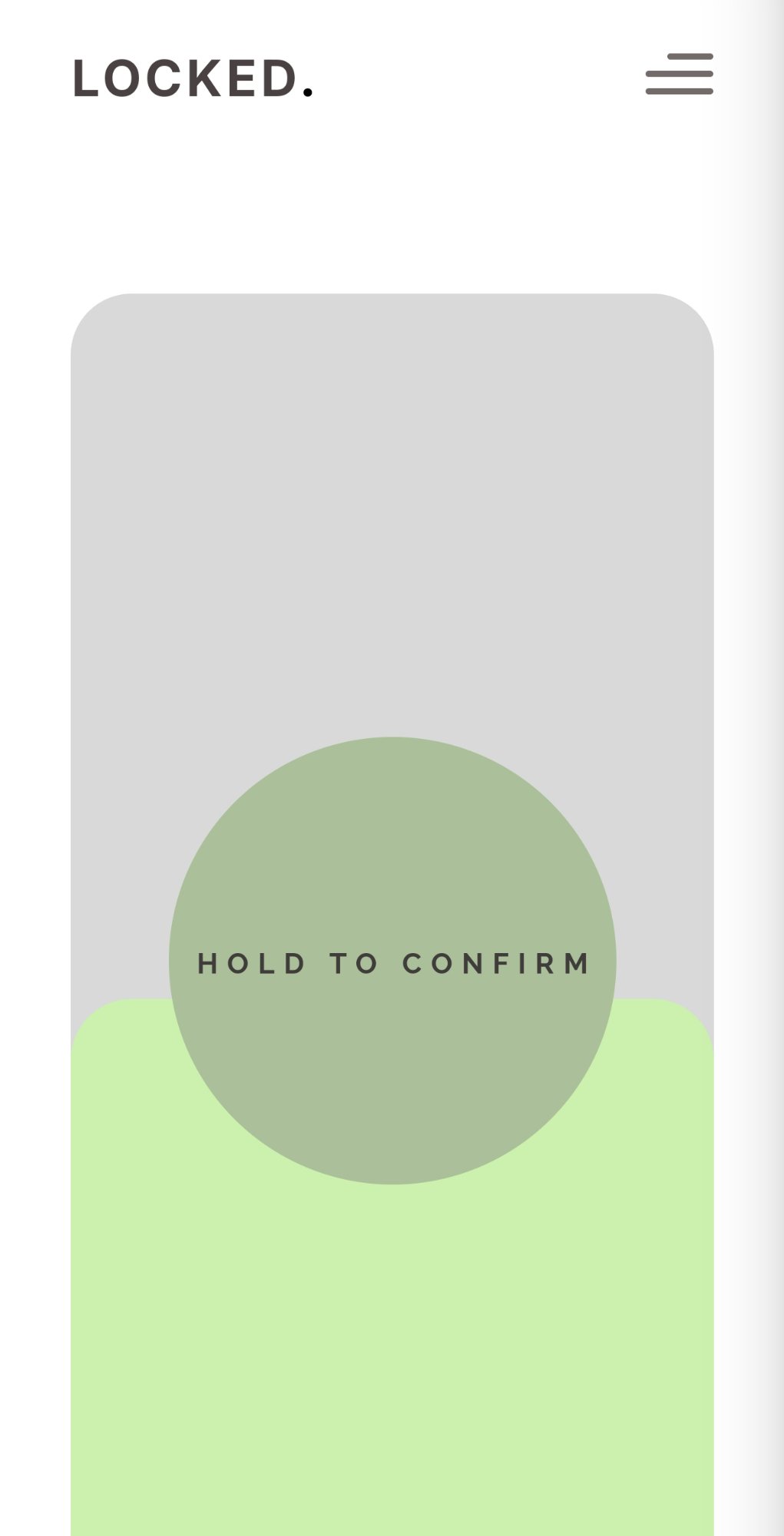
Green fills from the bottom like water. The circle scales slightly, simulating real pressure. Release early and everything resets.
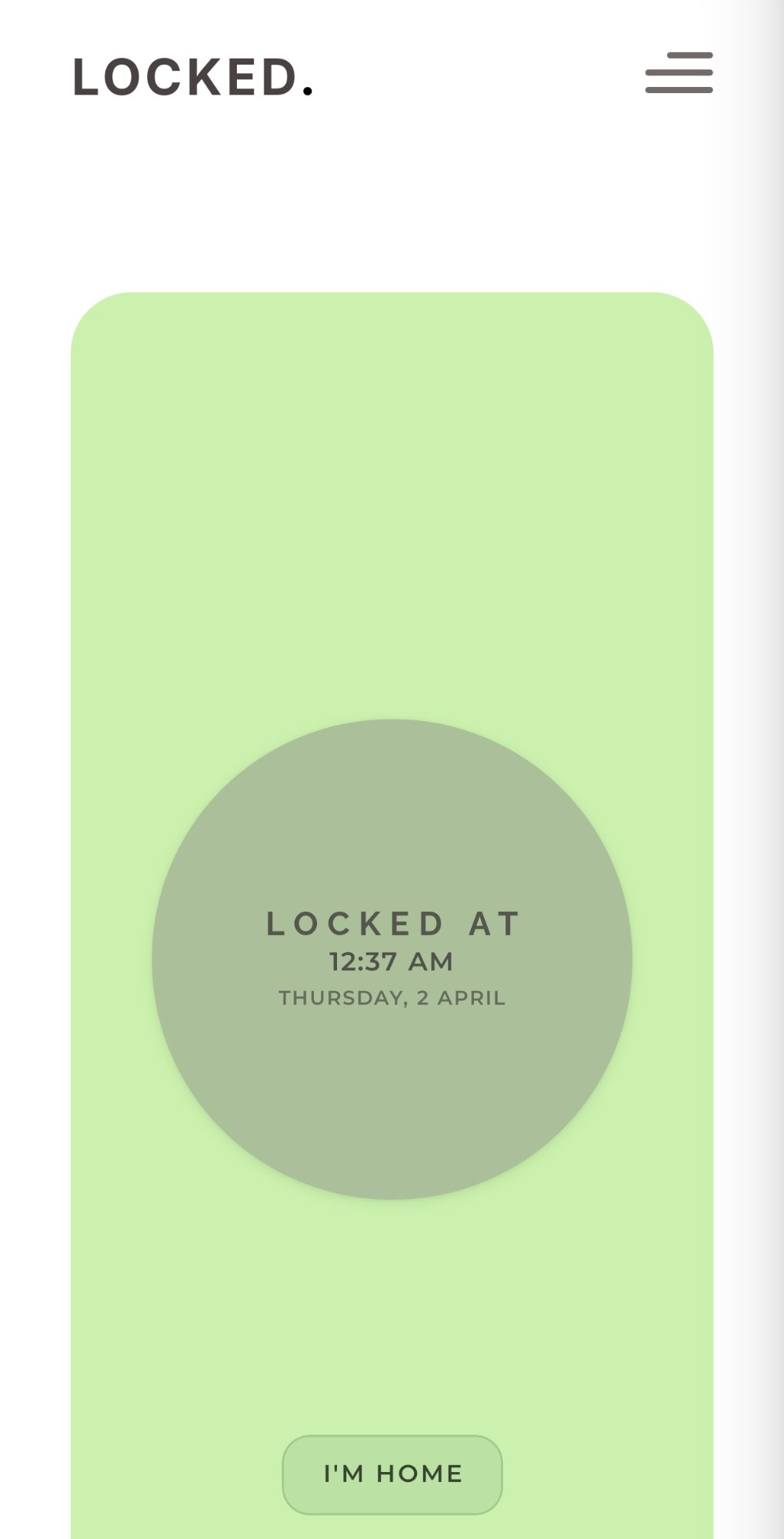
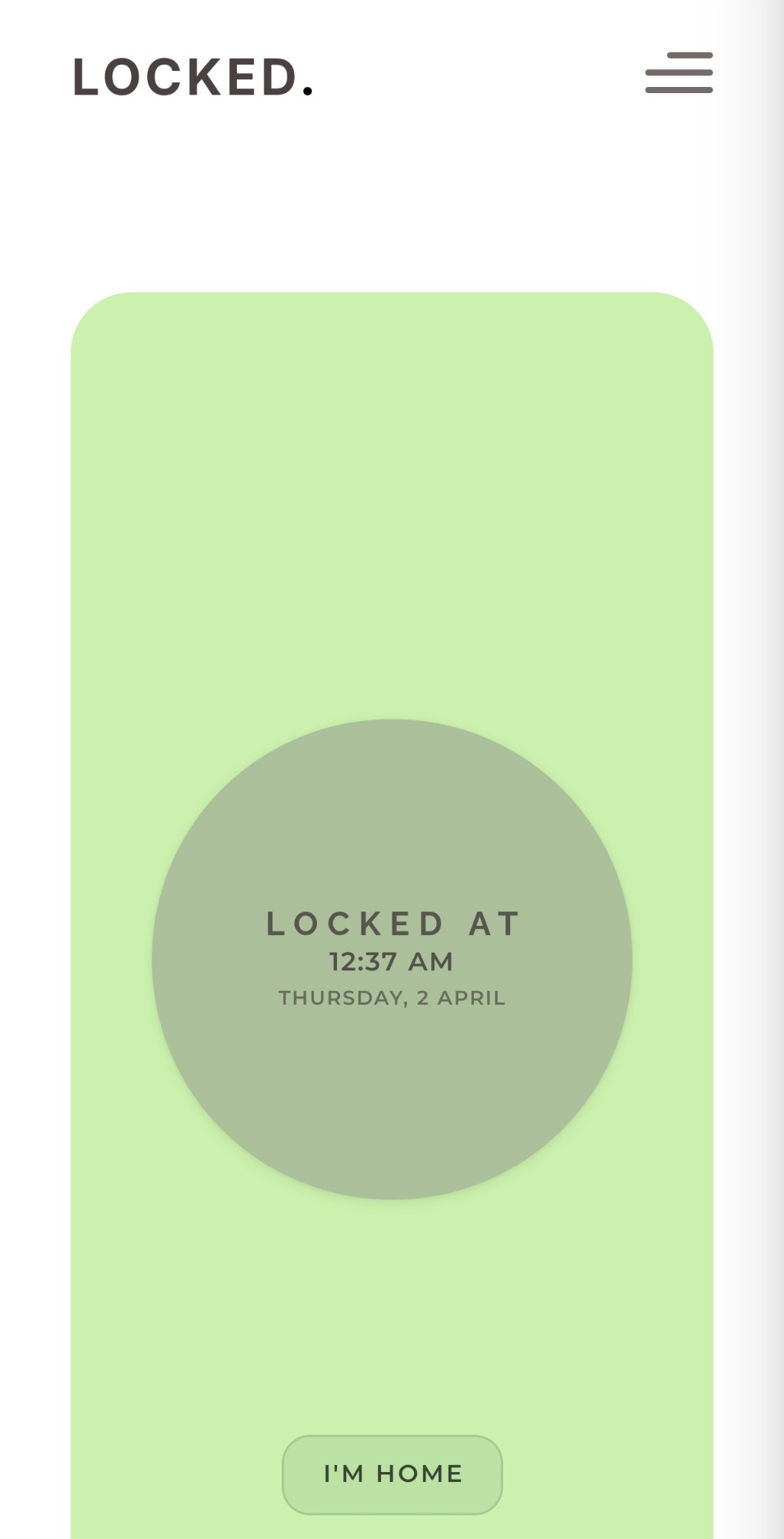
Full green. Timestamp shown. Persists indefinitely. Nothing auto resets. Ever. The only exit is I'M HOME, the least prominent element on screen.
Open 30 minutes later and a floating card appears: ARE YOU HOME? with the original timestamp visible. I'M HOME clears it. NOT YET keeps it.
The popup.
The plus tier.
The 30 minute popup appears when you reopen the app after leaving. It shows your original timestamp so you know exactly what data you are looking at, and gives you a binary choice: you are home, or you are not. No guessing, no ambiguity.
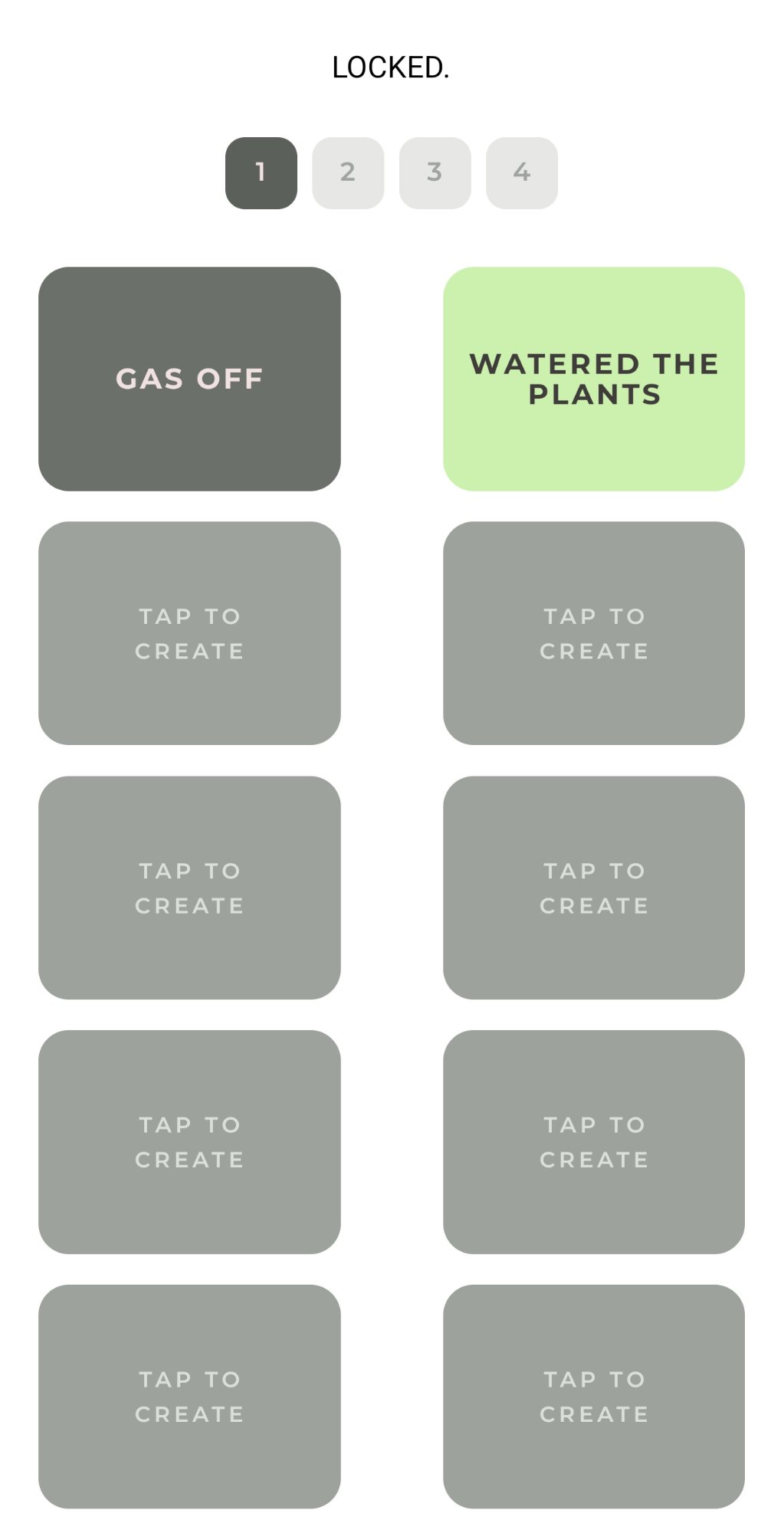
LOCKED PLUS adds a custom confirmation grid, up to 4 pages of items you track separately. Gas off, lights off, windows closed. Each one gets its own hold to confirm button. The color logic of the main screen carries through: confirmed is dark, unconfirmed is grey.
Design Decisions, Why each choice was made
Why no auto reset?
The anxiety this app addresses does not follow a schedule. An auto reset at midnight assumes you are home by midnight. The user decides when they are home. Not the app.
Why hold to confirm instead of a tap?
A tap can be accidental. The physical commitment of holding creates a deliberate moment, the brain registers the action differently. The ritual is the product.
Why is I'M HOME the least prominent element?
Because you should not want to dismiss the confirmation casually. The confirmed state should feel permanent and intentional to dismiss. Friction here is a feature.
Why green fills from the bottom?
Water rising. Pressure building. It mirrors the physical sensation of holding something, the animation earns its existence by reinforcing the metaphor rather than decorating it.
Why no dashboard, tabs, or settings?
Every screen added is a decision the user has to make. This app has one job. Adding navigation would have been designing for the wrong problem.
Why freemium with the paywall removed at launch?
Reviews matter more than revenue at zero users. One month of free premium generates the social proof that makes the paid tier credible. Distribution before monetisation.
It started as a portfolio piece. Then I realised I was one of the people who actually needed it.
The moment the brief became real